
Expert Surgical Care for a Serious and Life-Changing Injury
A hip fracture is a serious injury, especially in older adults, and is commonly related to osteoporosis, a condition that weakens bones and makes them more likely to break. Most hip fractures happen after a fall and require surgical treatment to restore mobility, reduce pain, and prevent life-threatening complications.
Dr. Armin Arshi is a fellowship-trained orthopedic surgeon who specializes in the latest surgical techniques for hip fractures and is a nationally recognized expert in this field. He has helped write clinical treatment guidelines and published on best practices for hospital care, DVT (blood clot) prevention, and osteoporosis management after hip fracture.
Understanding Hip Fractures
Femoral Neck Fractures
These fractures occur just below the ball of the hip joint, in the narrow “neck” of the femur (thigh bone). Because the blood supply to the femoral head is limited when the neck is broken, these fractures are at high risk for non-healing or bone death (osteonecrosis). For that reason, the most common treatment is hip replacement (arthroplasty).
Hip Replacement (Arthroplasty): This involves replacing the broken part of the hip with an artificial joint. Depending on the patient’s age, activity level, and overall health, this may be either a:
- Hemiarthroplasty (Partial Hip Replacement): Replaces just the ball of the hip.
- Total Hip Replacement: Replaces both the ball and socket of the hip joint, offering better long-term function for active, healthy individuals.
Dr. Arshi is one of the few surgeons in the world performing hip replacement for fractures using the minimally invasive direct anterior approach. This approach may lead to less muscle damage, quicker recovery, and fewer early complications, especially in elderly or frail patients.
Pinning (Screw Fixation): In about 5–10% of cases, if the fracture is truly non-displaced and the bone is well-aligned, internal fixation with screws may be attempted. However, this is rare and usually only considered for younger, healthier patients.
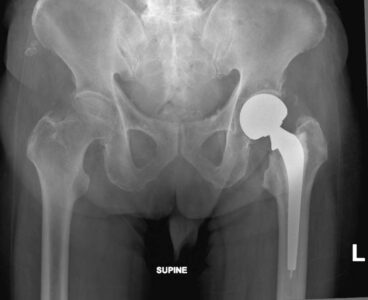
Hemiarthroplasty (Anterior Approach) for Displaced Femoral Neck Fracture
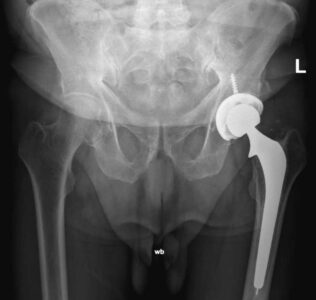
Total Hip Replacement (Anterior Approach) for Displaced Femoral Neck Fracture in an Active Pickleball Player
Intertrochanteric Hip Fractures
These fractures occur just below the femoral neck, in the area between the neck and the shaft of the thigh bone. In this location, the blood supply remains intact, so the goal is to stabilize the fracture and allow the bone to heal.
Surgical Fixation (Cephalomedullary Nail):
This is the most common treatment for intertrochanteric fractures. A special metal rod (nail) is placed inside the thigh bone and secured with screws to hold the fracture in place while it heals. This allows early weight-bearing and mobility, which is critical in older adults.
Don’t worry — the term “cephalomedullary nail” simply means a metal rod placed inside the bone to hold the fracture steady while it heals from the inside out.
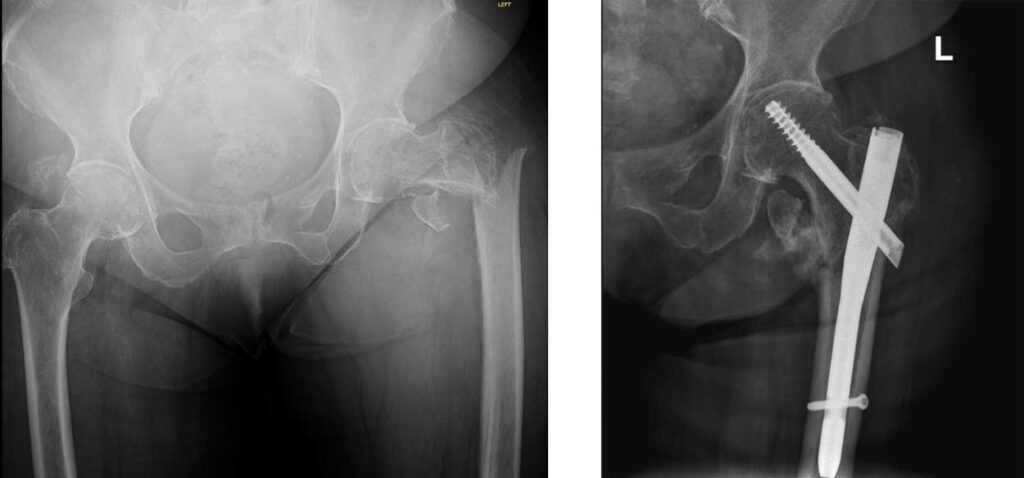
Intertrochanteric Hip Fracture Requiring Nail Fixation
Recovery After Hip Fracture Surgery
Recovery after hip fracture surgery varies depending on your age, overall health, and the type of procedure performed. However, some general expectations include:
- Hospital Stay: Most patients stay in the hospital for 1–3 days after surgery.
- Rehabilitation: A physical therapist will help you begin walking, usually within 24 hours of surgery. Early movement helps prevent complications like blood clots and pneumonia.
- Post-Acute Care: Depending on your strength and independence, you may be discharged to home, a rehabilitation facility, or a skilled nursing facility.
- Long-Term Recovery: Full recovery can take several months. Most patients regain the ability to walk with assistance and may return to many normal activities over time.
Dr. Arshi emphasizes preventing future fractures through osteoporosis treatment, fall prevention, and individualized rehab plans — all of which are part of your comprehensive care plan.
Hip Fracture Surgery: Frequently Asked Questions
Hip fractures can lead to major complications such as immobility, blood clots, infection, and loss of independence. Surgery helps stabilize the fracture quickly so that patients can get moving again and reduce health risks.
It depends on the type and location of the fracture. Femoral neck fractures are usually treated with hip replacement because of poor blood supply. Intertrochanteric fractures are usually treated with internal fixation. Dr. Arshi will make this decision based on X-rays, CT scans, and the patient’s age, activity level, and overall health.
The direct anterior approach is a minimally invasive surgical technique that allows access to the hip joint without cutting through muscle. Dr. Arshi uses this approach even in fracture cases, which is rare. It may lead to faster recovery, less pain, and fewer early complications, especially in elderly patients.
In most cases, yes. The goal is to get patients up and walking the next day with a walker or cane. Physical therapy begins in the hospital and continues after discharge to improve strength, balance, and confidence.
Yes, surgery is generally safer than non-surgical treatment, which often leads to poor outcomes due to immobility. Dr. Arshi works closely with medical doctors, anesthesiologists, and rehabilitation specialists to optimize care for patients with complex health conditions.
Unfortunately, yes—patients who have had one hip fracture are at higher risk for another. That’s why Dr. Arshi emphasizes osteoporosis management, bone-strengthening medication, and fall prevention strategies as part of your recovery plan.
Compassionate Care from a Nationally Recognized Expert
Dr. Arshi has published extensively on hip fractures, including best practices for surgical treatment, hospital protocols, blood clot prevention, and osteoporosis care. You or your loved one will receive evidence-based, personalized care with a focus on returning to function safely and efficiently.