
Advanced Solutions for Challenging Joint Conditions
Why Is This Surgery Considered Complex?
Not all joint problems are caused by typical wear-and-tear arthritis. Some patients need joint replacement due to:
- Post-traumatic arthritis (arthritis following a fracture or injury)
- Failed fracture fixation or complications from previous hardware
- Conversion from prior joint surgeries (e.g., hardware removal or failed implants)
- Congenital deformities (joint or bone issues present from birth)
- Osteonecrosis (bone death due to loss of blood supply)
These conditions can affect bone quality, alter normal anatomy, or complicate surgical access, requiring advanced planning and technique.
Why Choose Dr. Arshi?
Dr. Armin Arshi is a fellowship-trained orthopedic surgeon with extensive experience in complex joint reconstruction. He combines meticulous preparation, cutting-edge technology, and expert surgical technique to ensure every patient receives individualized care.
- Fellowship-trained in complex joint replacement
- Specialized expertise in technically demanding hip and knee surgeries
- Commonly uses MAKO robotic-assisted technology, allowing for precise component positioning and restoration of anatomy
- Utilizes computer-navigated assistance for enhanced accuracy
- Performs comprehensive preoperative evaluations
- Offers staged surgeries when needed for safety and optimal outcomes
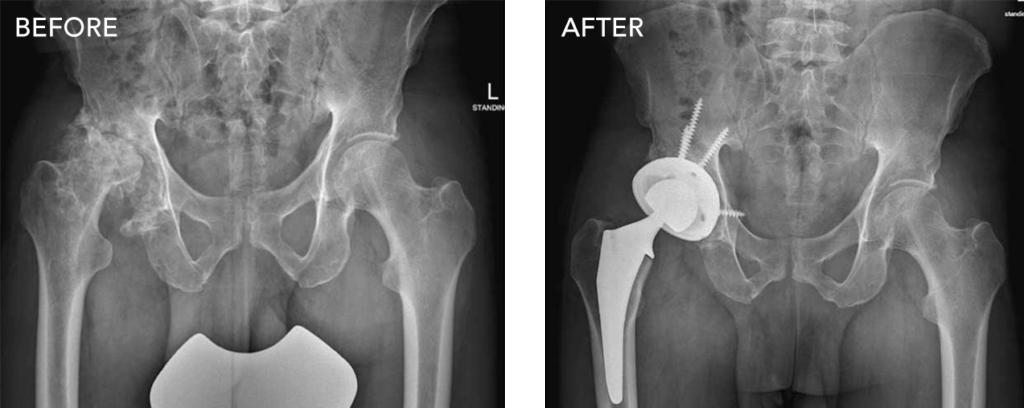
Complex Total Hip Replacement (Anterior Approach) with Jumbo Cup Reconstruction for Prior Acetabular Fracture-Dislocation
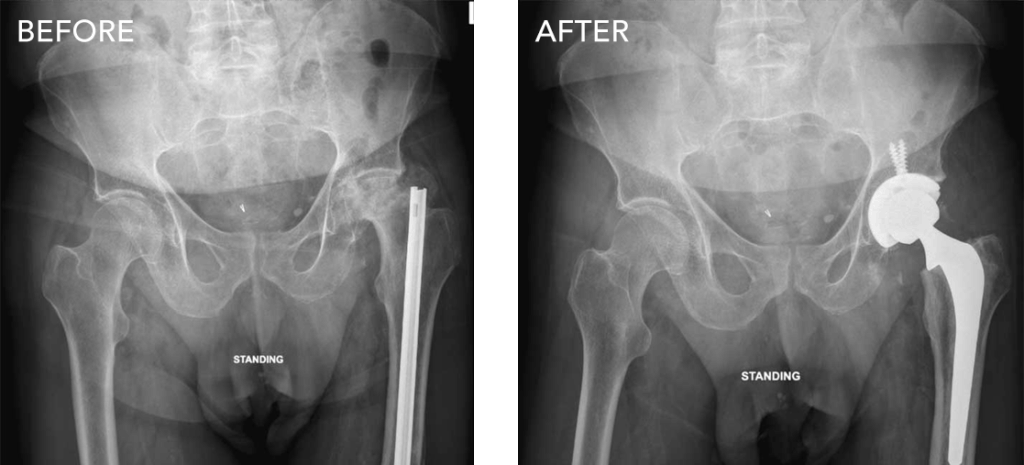
Conversion Total Hip Replacement (Anterior Approach) from Prior Kuntzer Nail Femur Fracture Fixation
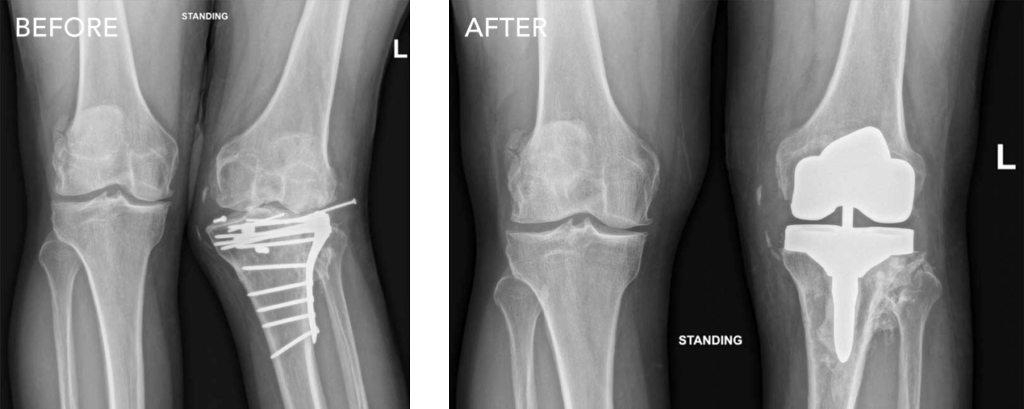
Conversion Total Knee Replacement (performed with MAKOplasty) from Failed ORIF of Tibial Plateau Fracture
What to Expect
Before Surgery
Each case begins with a thorough work-up, which may include:
- Advanced imaging (such as MRI, CT scan, or 3D mapping)
- Specialized blood tests to screen for hidden infections or inflammatory conditions
- Joint fluid aspiration or biopsy if infection, tumor, or unusual pathology is suspected
This preparation helps Dr. Arshi tailor the surgical plan to your unique anatomy and condition.
During Surgery
Dr. Arshi commonly uses MAKO robotic-assisted and computer-navigated techniques for complex cases, just as he does for routine hip and knee replacements. These technologies enhance:
- Accuracy in implant placement
- Joint alignment and stability
- Restoration of natural anatomy
- Minimized bone and soft tissue trauma
- Long-term implant performance
In select cases, surgery may need to be done in multiple stages, particularly if there are infection concerns, severe deformities, or hardware removal involved.
After Surgery
Recovery after complex joint replacement may take longer than standard cases. However, with close follow-up, guided physical therapy, and advanced surgical planning, patients often experience excellent long-term results.
Understanding the Risks
Due to the more difficult nature of these cases, complication rates are higher compared to routine hip or knee replacement. These may include:
- Infection
- Implant loosening or failure
- Blood clots
- Nerve or vascular injury
- Stiffness or joint instability
Dr. Arshi’s extensive experience, use of advanced imaging, and precision tools are all designed to reduce these risks and promote the best outcome possible.
Is This Right for You?
You may be a candidate for complex primary hip or knee replacement if you have:
- A failed previous joint surgery
- A history of trauma or fracture in the joint
- An unusual joint deformity or bone structure
- Osteonecrosis or avascular necrosis
- Chronic pain or loss of function not responding to other treatments
Frequently Asked Questions
Joint replacements are considered complex when the anatomy is abnormal or when there is a history of trauma, prior surgeries, deformity, or infection. These factors require more planning, experience, and often specialized tools to achieve a successful outcome.
Dr. Arshi performs a thorough evaluation including advanced imaging (MRI, CT, or 3D scans), blood tests, and sometimes joint aspiration or biopsy. This helps identify potential risks, customize the surgical plan, and reduce complications.
Most likely, yes. Dr. Arshi commonly uses MAKO robotic-assisted technology along with computer navigation in nearly all hip and knee replacements, including complex cases. These tools provide added precision, help restore natural anatomy, and improve outcomes.
A staged procedure is when surgery is performed in two or more separate operations. This is often done when there is infection, significant deformity, or existing hardware that must be removed first. Staging increases safety and improves long-term results.
Yes, the risk of complications is higher due to the technical challenges involved. However, Dr. Arshi’s expertise, use of advanced planning, and precise surgical techniques are focused on minimizing these risks and achieving a successful outcome.
Recovery from complex joint replacement varies. While walking may begin soon after surgery, full recovery can take longer than with routine joint replacement. A structured rehabilitation plan and close follow-up help support the healing process.
While the joint may not feel exactly like a natural one, most patients experience significant pain relief and improved function. Dr. Arshi’s precise surgical technique and use of modern implants help restore as much normal motion and stability as possible. Because of the severity of deformity or pain these patients often have before surgery, they frequently end up being some of Dr. Arshi’s most satisfied patients due to the dramatic improvement in their quality of life.
Take the First Step Toward Recovery
If you’ve been told your case is “too complicated” for a standard joint replacement, don’t give up. Dr. Arshi’s expertise in complex joint surgery and advanced technologies may be the solution you need.
Call us to schedule your consultation and see if complex joint reconstruction is right for you.