
Precision. Personalization. Better Outcomes.
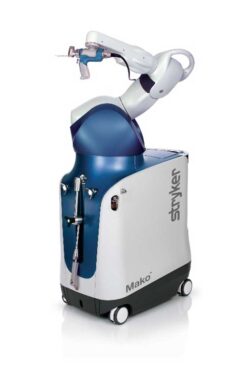
At Dr. Arshi’s practice, we use the MAKO Robotic-Assisted Surgical System to perform minimally invasive joint replacement surgery for the knee. This cutting-edge technology enhances surgical accuracy, improves implant positioning, and supports faster recovery—helping you get back to the activities you love with less pain and greater confidence.
Dr. Arshi routinely uses robotic-assisted techniques for:
- Total Knee Replacement (TKA)
- Partial Knee Replacement (UKA)
- Direct Anterior Total Hip Replacement (THA)
Why Choose Robotic-Assisted Surgery?
Traditional joint replacement relies on manual instruments and alignment guides. While highly effective, there can be small variations in implant placement. Robotic-assisted technology takes precision to the next level by using 3D imaging and real-time guidance during surgery.
Benefits include:
- Sub-millimeter accuracy in implant positioning
- Personalized surgical planning tailored to your anatomy
- Smaller incisions and less soft tissue damage
- More natural joint motion and feel after surgery
- Lower risk of complications and implant wear
- Faster, smoother recovery
How Robotic Technology Works
- Preoperative Planning
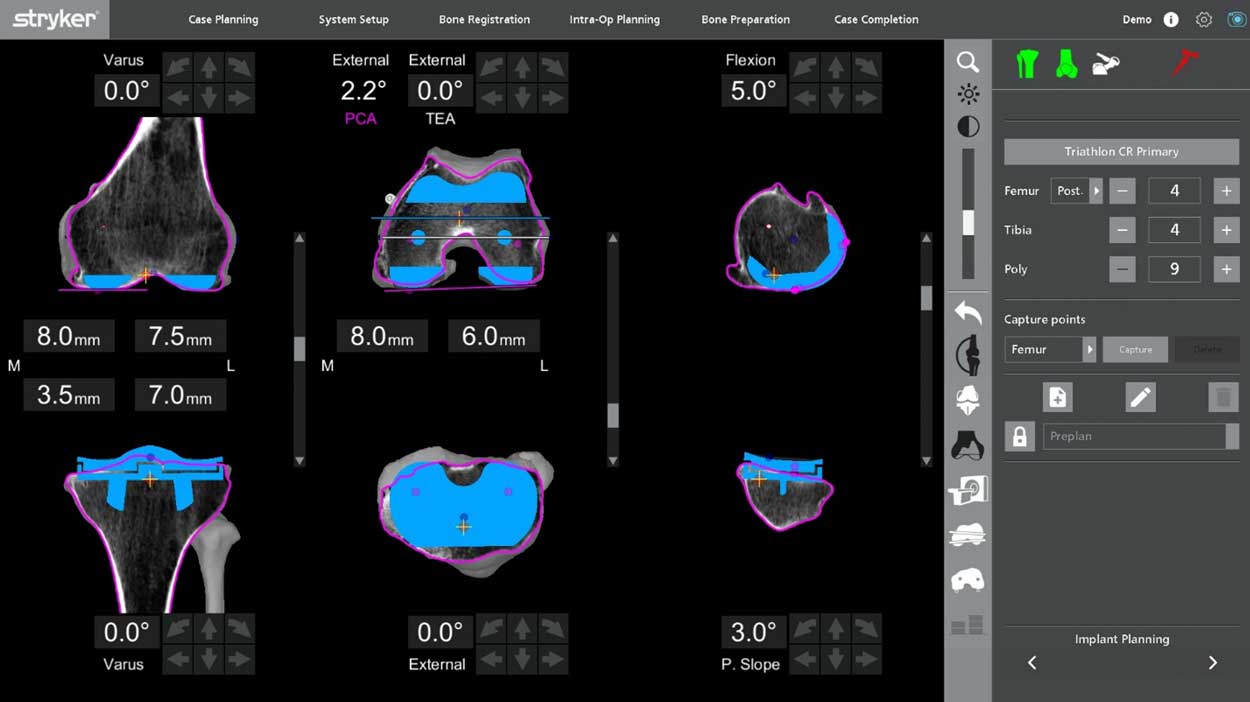
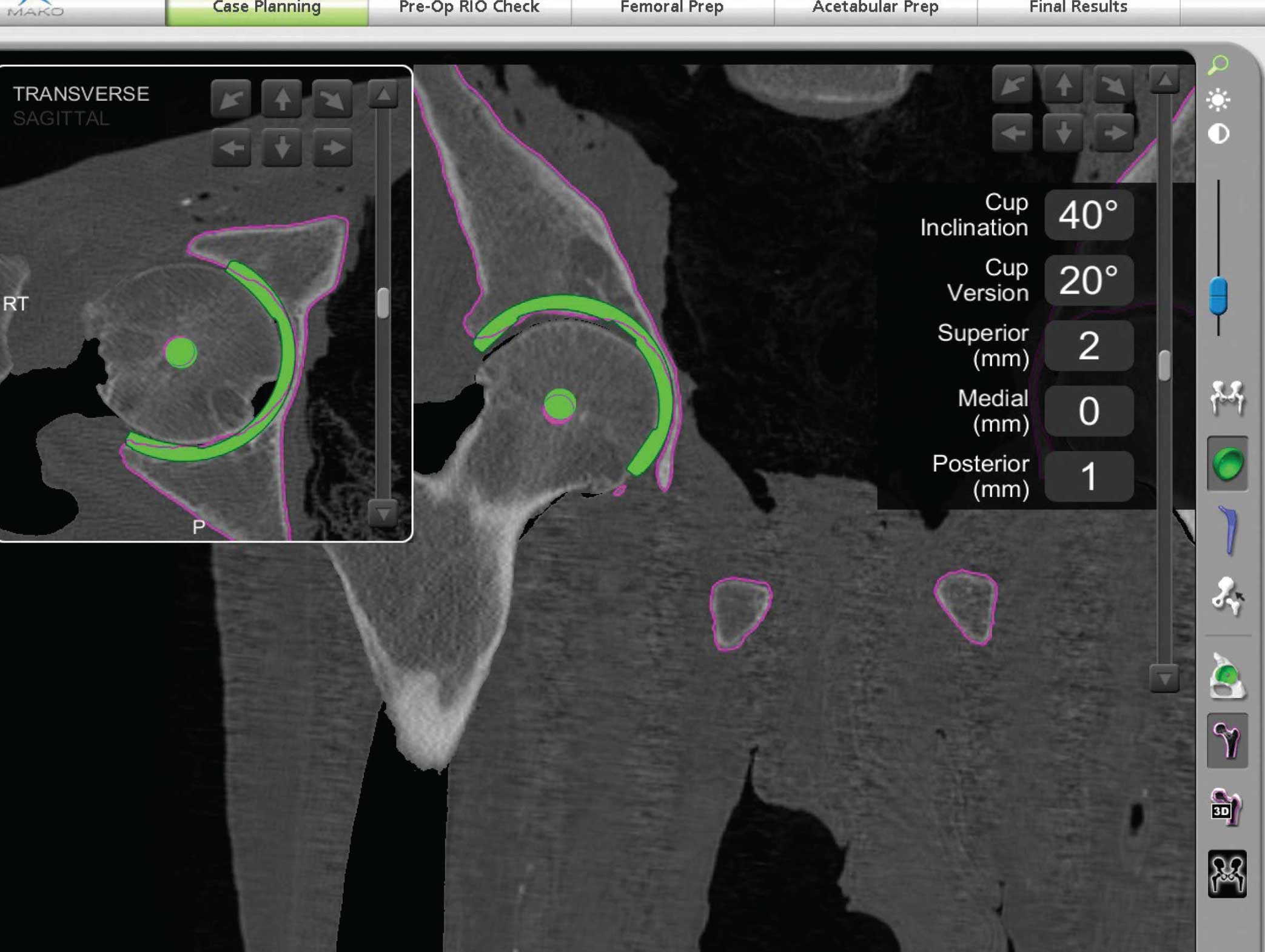
A 3D CT scan of your joint is used to create a virtual model of your anatomy. This allows Dr. Arshi to design a personalized surgical plan with exact implant size and positioning. - Intraoperative Guidance
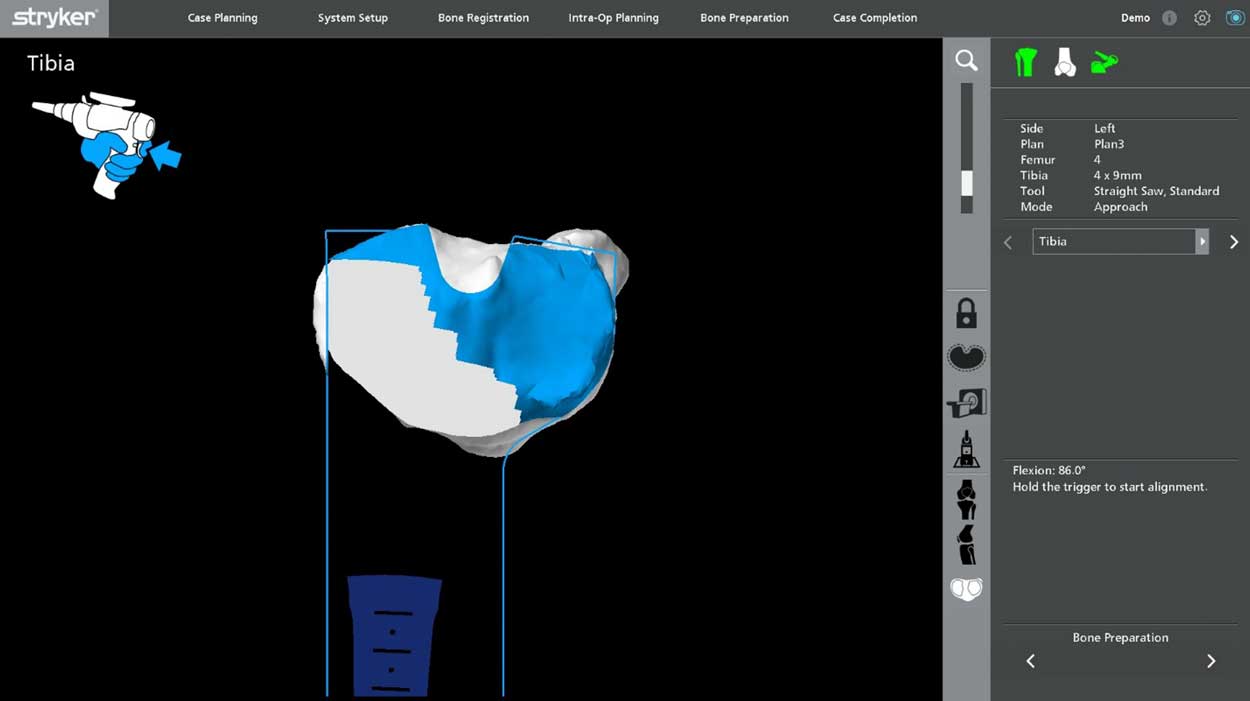
During surgery, the MAKO system provides real-time feedback. The robotic arm assists Dr. Arshi in preparing the bone and placing the implant with unparalleled precision—while protecting surrounding tissue. - Postoperative Benefits
Because your implant is positioned more accurately, you benefit from improved joint alignment, stability, and long-term performance.
Robotic-Assisted Procedures Offered
Total Knee Replacement (TKA)
- For advanced arthritis affecting the whole knee
- MAKO ensures optimal alignment and balance of the new joint
- Minimally invasive, with many patients going home the same day
Partial Knee Replacement (UKA)
- For arthritis limited to one side of the knee
- Robotic assistance allows precise removal of only the damaged portion
- Preserves healthy bone and ligaments for a more natural knee feel
Direct Anterior Total Hip Replacement (THA)
- For patients with hip arthritis or damage
- Performed through a minimally invasive anterior approach
- Smaller incision, less muscle disruption, and faster recovery
Recovery Timeline
While recovery depends on the type of surgery and each patient’s health, robotic-assisted techniques generally lead to:
- Walking the same day of surgery (with assistance)
- Same-day discharge for many patients
- Return to light activities:
- 2–4 weeks for partial knee or anterior hip replacement
- 6–8 weeks for total knee replacement
- Continued improvement in strength, mobility, and comfort for several months
Robotic-Assisted Joint Replacement: Frequently Asked Questions
It’s an advanced surgical technique that uses a robotic arm guided by Dr. Arshi to perform knee replacement with greater precision. The robot doesn’t perform the surgery—it assists your surgeon by ensuring accuracy and protecting healthy tissue.
Robotic-assisted surgery provides sub-millimeter accuracy, better implant alignment, smaller incisions, and faster recovery. Patients often experience more natural joint motion, less pain, and improved long-term implant durability.
Many patients undergoing total knee, partial knee, or hip replacement are candidates. During your evaluation, Dr. Arshi will confirm whether robotic assistance is appropriate for your condition.
Yes. The MAKO system is FDA-approved and has been used in hundreds of thousands of procedures worldwide. It enhances surgeon control and precision while reducing risks associated with misalignment or soft tissue damage.
Recovery varies by procedure, but many patients return to daily activities faster than with traditional techniques—often within weeks rather than months. For total knee replacement, return to light activity is typically 6–8 weeks.
Many patients report their new joint feels stable, strong, and more comfortable than before surgery. Robotic-assisted planning and precise implant placement help support a more natural feel and function.
Insurance coverage for joint replacement is the same whether robotic assistance is used or not. Any additional technology costs are typically included as part of your standard surgical care.
Ready to Experience the Benefits of Robotic-Assisted Surgery?
If you’re considering knee or hip replacement, robotic-assisted technology may help you achieve the best possible outcome. Contact us today to schedule a consultation with Dr. Armin Arshi.